.png)
Nature-based Solutions treat nature as an ally rather than an obstacle
The European Commission’s definition emphasizes that Nature-based Solutions (NbS) are not only about protecting nature, but about working with nature to address societal challenges in a holistic, sustainable, and resilient way.

Small-scale Nature-based Solutions
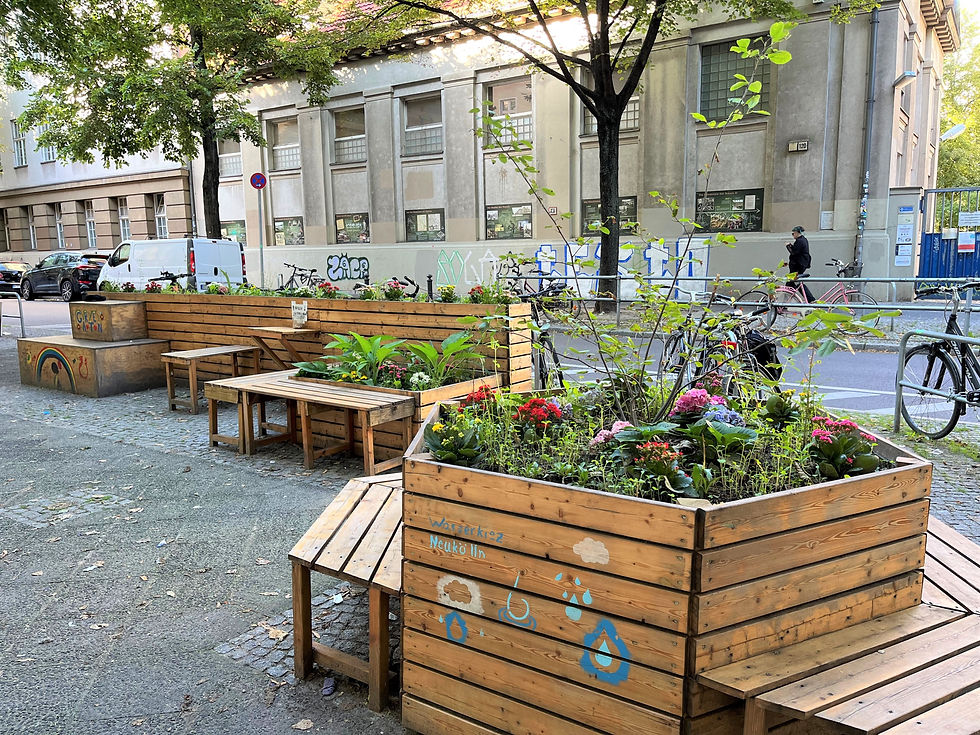
Low-threshold NbS are small-scale, accessible interventions that can be implemented by individuals, communities, or local organisations with relatively low cost, limited technical expertise, and minimal bureaucratic barriers.
They are particularly important because they:
-
enable citizen participation,
-
can be quickly implemented,
-
are adaptable to local conditions,
-
and create visible, tangible impacts in everyday urban life.
Examples of Small-scale NbS
Water-sensitive Solutions
-
Rain barrels for collecting roof runoff
-
Small rain gardens in courtyards or along streets
-
Infiltration trenches or simple drainage adaptations
These help reduce water scarcity, manage stormwater, and decrease pressure on urban drainage systems.
Micro-greening Interventions
-
Tree pit greening
-
Pocket gardens and community gardens
-
Balcony and rooftop planting
They enhance urban biodiversity and improve microclimates.
Micro-forests and Dense Planting
-
Tiny forests (Miyawaki method)
-
Dense native planting in small plots
These rapidly increase biodiversity and carbon capture even in limited spaces.
Community-driven Actions
-
Neighbourhood planting initiatives
-
DIY green walls
-
Local composting systems
Such practices strengthen local ownership and social cohesion. Low-threshold NbS act as entry points—demonstrating that climate adaptation is not only a top-down process but can begin at the neighbourhood and even household level.
Benefits of Nature-based Solutions
NbS generate multiple, interconnected benefits across environmental, social, and economic dimensions. Their strength lies in delivering co-benefits—addressing several challenges at once.
1. Climate Adaptation
NbS enhance the ability of cities to cope with climate impacts:
-
Urban heat reduction: Trees and vegetation provide shade and evapotranspiration, lowering temperatures.
-
Stormwater management: Rain gardens, permeable surfaces, and soils absorb excess water, reducing flooding.
-
Drought resilience: Soil moisture retention and water harvesting systems support water availability.
Small-scale DIY actions—such as installing a rain barrel or planting shade-providing vegetation—can significantly contribute to local climate resilience.
2. Biodiversity Enhancement
-
Creation of habitats for pollinators, birds, and small wildlife
-
Increased ecological connectivity within cities
-
Support for native species
Even small interventions like balcony planting or tree pit greening can act as micro-habitats.
3. Improved Human Well-being
-
Reduced stress and improved mental health
-
Increased opportunities for recreation and social interaction
-
Strengthened sense of place and belonging
Access to green spaces—even small ones—has proven positive effects on psychological well-being.
4. Social Cohesion and Participation
-
Encourages collective action and community engagement
-
Builds local stewardship of shared spaces
-
Facilitates knowledge exchange and co-creation
Low-threshold NbS are especially powerful in this regard, as they directly involve citizens.
5. Economic Benefits
-
Cost-effective alternatives to grey infrastructure
-
Reduced costs related to flood damage and heat stress
-
Increased property value and attractiveness of urban areas
DIY and small-scale solutions are particularly efficient due to their low implementation and maintenance costs.
6. Educational and Transformative Value
-
Raise awareness about climate and biodiversity
-
Enable hands-on learning
-
Foster long-term behavioural change
By engaging people directly, NbS shift mindsets—from passive adaptation to active participation.
What are Nature-based Solutions (NbS)?
Nature-based Solutions (NbS) are actions that work with and enhance natural processes to address societal challenges such as climate change, biodiversity loss, and urban vulnerability. Rather than relying solely on engineered or “grey” infrastructure, NbS use ecosystems—such as forests, soils, wetlands, and urban green spaces—as functional systems that provide multiple benefits. NbS are defined by their ability to simultaneously:
-
support biodiversity,
-
improve human well-being,
-
and address environmental challenges in a sustainable and resource-efficient way.
In urban contexts, NbS play a critical role in adapting cities to climate change by reducing heat, managing water, improving air quality, and strengthening social cohesion.